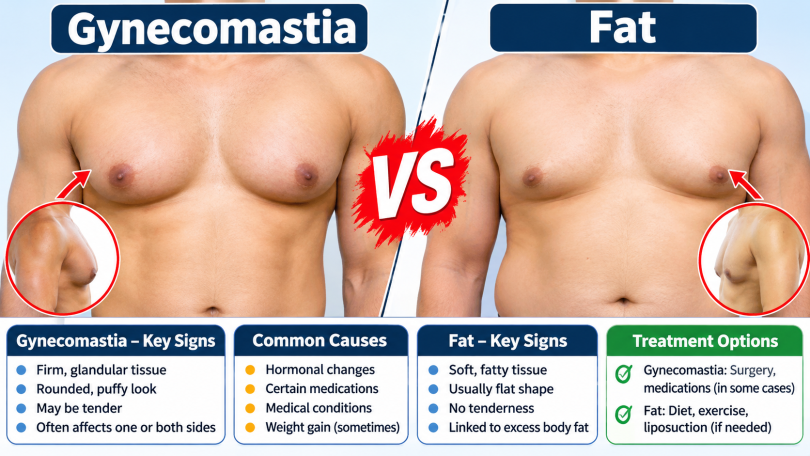
Male chest enlargement can happen for different reasons. Some men develop excess fat around the chest, while others experience an increase in glandular breast tissue. Although both conditions can make the chest appear larger, their causes and treatments differ.
Understanding gynecomastia vs fat can help you recognize the possible reasons for an enlarged male chest. Gynecomastia involves enlarged glandular breast tissue, whereas pseudogynecomastia occurs when excess fat accumulates in the chest. Both conditions can also occur together.
What Is Gynecomastia?
Gynecomastia is the enlargement of glandular breast tissue in males. It often develops when the effects of estrogen and testosterone become unbalanced. Although both hormones are present in males and females, changes in their levels or activity can affect breast tissue growth.
The condition can occur during puberty, adulthood, or older age. During puberty, temporary hormonal changes may cause breast tissue to enlarge. In many adolescents, this improves naturally as hormone levels stabilize.
In adults, gynecomastia may be associated with certain medications, hormonal disorders, or underlying health conditions. It can affect one or both sides of the chest.
Common signs include a firm or rubbery area beneath the nipple, swelling around the areola, and tenderness. However, not everyone experiences pain. Gynecomastia is usually benign. If the enlargement is persistent or accompanied by unusual symptoms, a medical assessment can help identify the cause and determine whether treatment is needed.
What Is Chest Fat or Pseudogynecomastia?
Chest fat refers to excess fatty tissue around the male chest. When fat accumulation makes the breasts appear enlarged without an increase in glandular breast tissue, the condition is called pseudogynecomastia, also known as lipomastia.
It is often associated with weight gain, although you do not have to be overweight to carry more fat around your chest. Genetics, age, and individual body composition influence where your body stores fat.
Chest fat generally feels softer and may spread across a larger area. If excess fat is responsible for your chest enlargement, gradual weight loss may reduce its size. Regular exercise can also improve overall fitness and muscle definition.
However, you cannot choose exactly where your body loses fat. It is also possible to have both pseudogynecomastia and true gynecomastia. In this situation, weight loss may reduce the fatty tissue while leaving some glandular enlargement behind.
Gynecomastia vs Fat: Key Differences
The Gynecomastia vs Fat main difference is the type of tissue responsible for the enlargement. Gynecomastia involves glandular breast tissue, while pseudogynecomastia results from excess fat.
| Feature | Gynecomastia | Chest Fat |
| Main cause | Enlargement of glandular breast tissue | Accumulation of excess fat |
| Texture | May feel firm or rubbery beneath the nipple | Generally feels softer |
| Location | Often centered around the nipple and areola | May cover a wider chest area |
| Tenderness | May cause pain or sensitivity | Usually painless |
| Effect of weight loss | Glandular tissue may remain | May decrease with overall fat loss |
| Common causes | Hormonal changes, medications, and medical conditions | Weight gain and individual fat distribution |
| Treatment | Observation, medical treatment, or surgery, depending on the cause | Weight management when appropriate |
These are general patterns rather than definitive diagnostic rules. Gynecomastia does not always feel firm, and fat can accumulate directly around the nipple. Both conditions may occur together. For example, your chest may become smaller after weight loss, but some enlargement may remain because glandular tissue can persist even when body fat decreases.
How to Tell If You Have Gynecomastia or Chest Fat
When comparing gynecomastia vs fat, pay attention to where the enlargement occurs, whether you experience tenderness, and how the area changes over time. These observations can help you understand the possible cause of your chest enlargement.
1. Check Where the Enlargement Is Located
Gynecomastia often causes a noticeable area of tissue directly beneath the nipple or areola. The nipple area may appear rounded or protrude more than usual.
Chest fat may spread across a larger portion of the chest, creating a generally fuller appearance. However, fat can also accumulate around the nipple, and glandular enlargement may affect a wider area.
2. Understand the Difference in Texture
Glandular tissue associated with gynecomastia may feel firm or rubbery beneath the nipple. It can also be tender, particularly during the early stages.
Excess chest fat generally feels softer and may blend into the surrounding fatty tissue. The texture varies depending on the amount of fat, the presence of glandular tissue, and individual anatomy.
3. Notice Tenderness and Other Symptoms
Tenderness around the nipple can occur with gynecomastia, especially when the condition develops recently. Chest fat usually does not cause pain by itself.
Pay attention to when the enlargement started and whether it is changing. New swelling, persistent pain, nipple discharge, or a hard lump should be assessed by a healthcare professional.
Can You Tell the Difference by Touch?
Touch may provide clues, but it cannot reliably distinguish glandular breast tissue from excess fat. Gynecomastia may feel firm, while pseudogynecomastia may feel soft, but these patterns are not universal. The two conditions can coexist, so a physical examination is the most useful way to clarify the cause when symptoms are unclear.
What Causes Gynecomastia?
Gynecomastia can develop because of hormonal changes, medication effects, or underlying health conditions. Identifying the cause matters because treatment depends on why the glandular tissue has enlarged.
Hormonal Changes During Puberty and Aging
Changes in estrogen and testosterone activity can stimulate breast tissue growth. During puberty, these fluctuations may cause temporary gynecomastia, which often resolves naturally as hormone levels stabilize.
Older men may also experience hormonal changes as they age. In some cases, reduced testosterone activity relative to estrogen activity contributes to glandular breast enlargement.
Certain Medications and Anabolic Steroids
Some prescription medicines can contribute to gynecomastia. These may include certain medications used for prostate conditions, some cardiovascular medicines, and drugs that affect hormone activity. Anabolic steroids and non-prescribed hormone products can also disrupt hormonal balance. If you suspect that a medicine is contributing to your symptoms, speak with your prescribing doctor before changing or stopping the treatment.
Underlying Health Conditions
Certain medical conditions can affect hormone production or how the body processes hormones. Possible causes include:
- Low testosterone or other hormonal disorders.
- An overactive thyroid.
- Liver disease.
- Kidney disease.
- Certain conditions affecting the testes or hormone-producing glands.
Having gynecomastia does not automatically mean you have an underlying illness. A doctor can determine whether your symptoms warrant further investigation.
What Causes Excess Chest Fat?
Excess chest fat usually develops when the body stores more fat in the chest area. It can affect people of different ages and body sizes without necessarily indicating a hormonal problem.
Overall Weight Gain
When you gain body fat, some of it may accumulate around your chest. Genetics and individual fat distribution influence how much fat develops in this area.
If chest enlargement is primarily caused by excess fat, gradual weight loss may reduce its size. However, you cannot control where fat is lost first.
Genetics and Body Composition
Some people naturally store more fat around the chest than others. Genetics, age, and body composition can influence chest shape, even among people with similar body weights.
A larger chest does not automatically indicate gynecomastia or obesity. The type of tissue involved matters more than appearance alone.
Can Chest Fat Occur Without Being Overweight?
Yes. You can carry fat around your chest even if your overall body weight is within a healthy range. Fat distribution varies, and natural anatomy and muscle development also affect chest shape.
If chest enlargement persists despite changes in body weight, a medical professional can help determine whether glandular tissue is contributing to the appearance.
Can Weight Loss Get Rid of Gynecomastia?
Whether weight loss reduces male breast enlargement depends on the type of tissue involved. If your chest enlargement is mainly due to excess fat, losing weight may make the area smaller. However, weight loss alone may not remove established glandular breast tissue.
When you lose body fat, your chest may become flatter and more defined. The results depend on your starting body composition, genetics, and fat distribution.
If both glandular tissue and excess fat are present, weight loss can reduce the fatty component while leaving some glandular enlargement behind.
Avoid extreme diets or rapid weight-loss methods to change your chest shape. Gradual weight loss, balanced meals, and regular physical activity are generally more sustainable.
Exercises That May Help Reduce Chest Fat
Exercise can support weight management and strengthen the muscles beneath the chest. However, no exercise can selectively burn chest fat or directly remove glandular breast tissue.
Useful activities include:
- Walking or cycling: Supports weight management and general fitness.
- Push-ups: Strengthen the chest, shoulders, and triceps.
- Bench presses: Develop chest muscle strength.
- Dumbbell presses: Provide another way to train the chest.
- Resistance training: Supports overall strength and muscle development.
A consistent routine that includes recovery, adequate nutrition, and regular activity is more useful than repeatedly training the same muscles. Building chest muscles may change the area’s appearance, but it will not eliminate glandular tissue.
How Is Gynecomastia Diagnosed?
Diagnosis usually begins with a discussion of your symptoms and medical history, followed by a physical examination. Your doctor may ask when the enlargement started, whether it affects one or both sides, and whether you have pain or nipple sensitivity.
They may also review your medicines, supplements, steroid use, and relevant medical conditions.
Blood Tests and Hormone Testing
Blood tests are not necessary for everyone with gynecomastia. Depending on your symptoms and medical history, your doctor may recommend tests to assess testosterone, estrogen, thyroid function, liver function, or kidney function. These tests can help identify an underlying cause when further investigation is appropriate.
Ultrasound and Other Imaging Tests
Imaging may be recommended when the examination does not clearly establish the cause of breast enlargement. Depending on your age and symptoms, a doctor may suggest breast ultrasound or mammography. Not everyone with an enlarged chest needs imaging or extensive testing. The choice depends on the clinical findings.
Treatment Options for Gynecomastia vs Fat
Treatment depends on whether the enlargement comes from excess fat, glandular breast tissue, or both. Your age, symptoms, the duration of the condition, and any underlying medical issues also influence the decision.
Treatment for Chest Fat
If excess fat is responsible for your chest enlargement, weight management may help reduce it. A balanced diet, regular physical activity, and sustainable eating habits can support gradual fat loss.
Strength training can improve chest muscle development, while cardiovascular exercise supports general fitness. Neither approach guarantees that fat will disappear from the chest first.
If you are already at a healthy weight and the enlargement remains, a doctor can assess whether glandular tissue or another factor may be involved.
Medical Treatment for Gynecomastia
Treatment depends on the cause and how long the condition has been present. In adolescents, gynecomastia may resolve naturally, so a doctor may recommend observation.
If a medication or underlying health condition contributes to the problem, addressing that cause may help. A doctor may review your medicines or recommend treatment for a diagnosed hormonal or medical issue.
In selected cases, a specialist may consider medication, particularly when the condition is recent and symptoms are significant. However, no single medicine works for everyone, and treatment requires medical supervision.
Avoid taking testosterone, hormone-blocking medicines, or supplements marketed as gynecomastia cures without professional advice.
Gynecomastia Surgery
Surgery may be considered when gynecomastia persists, causes significant discomfort, or creates ongoing concerns about chest appearance.
Two common approaches are:
- Liposuction: Removes excess fat through small incisions.
- Glandular tissue excision: Removes excess breast gland tissue when glandular enlargement remains.
Some people need a combination of both procedures. The appropriate approach depends on the tissue involved, skin elasticity, and the surgeon’s assessment.
Potential surgical risks include bleeding, infection, scarring, changes in nipple sensation, and uneven chest contours. Recovery time varies, and the final appearance may take time to settle.
If you are considering surgery, consult a qualified surgeon experienced in treating gynecomastia. Discuss expected results, recovery, possible complications, and whether the procedure is suitable for you.
When Should You See a Doctor?
Although male chest enlargement is often benign, certain symptoms require medical attention. Arrange an appointment if you notice:
- New or rapidly increasing enlargement: A noticeable change over a short period.
- Persistent pain or tenderness: Ongoing discomfort around the breast or nipple.
- A hard or unusual lump: Particularly one that is fixed in place or away from the nipple.
- Nipple discharge or bleeding: These symptoms should not be dismissed.
- Skin or nipple changes: Skin dimpling or nipple retraction.
Male breast cancer is uncommon, and most cases of gynecomastia are not cancerous. Nevertheless, unusual breast changes deserve attention, particularly when they affect only one side or occur alongside nipple or skin abnormalities.
Frequently Asked Questions (FAQs)
Q1. How do I know if I have gynecomastia or just chest fat?
When comparing gynecomastia vs fat, gynecomastia often involves firm or rubbery glandular tissue beneath the nipple, while chest fat generally feels softer and may cover a wider area. These signs are not definitive, so a doctor can assess the tissue and determine whether testing is needed.
Q2. Can gynecomastia go away with weight loss?
Weight loss may reduce chest size if excess fat contributes to the enlargement. However, it does not reliably remove glandular breast tissue. If you have both conditions, losing weight may reduce the fatty component while leaving some glandular tissue behind.
Q3. Does gynecomastia feel hard or soft?
Gynecomastia may feel firm or rubbery beneath the nipple and can sometimes be tender. Texture varies, however. A hard lump, particularly one associated with nipple changes, should be evaluated by a healthcare professional.
Q4. Can you have gynecomastia and chest fat at the same time?
Yes. Glandular breast tissue and excess fat can occur together. This makes it difficult to distinguish gynecomastia from pseudogynecomastia based on appearance alone. Treatment depends on the tissue involved and the underlying cause.
Q5. What is the best treatment for gynecomastia?
Treatment depends on the cause, duration, and symptoms. Some cases improve without treatment, while others may require management of an underlying condition, selected medical treatment, or surgery.
Q6. Can push-ups and chest workouts cure gynecomastia?
No. Push-ups and other chest exercises strengthen the muscles beneath breast tissue, but they do not directly remove enlarged glandular tissue. Exercise can support fitness and help reduce overall body fat.
Q7. Is gynecomastia dangerous?
Gynecomastia is usually benign, but it can sometimes be associated with medications, hormonal changes, or underlying health conditions. New lumps, nipple discharge, skin changes, or rapidly developing enlargement should be assessed by a doctor.
Wrapping Up
Understanding gynecomastia vs fat starts with recognizing that the two conditions involve different types of tissue. Gynecomastia is the enlargement of glandular breast tissue, while pseudogynecomastia occurs when excess fat makes the chest appear larger.
If excess chest fat is the main cause, gradual weight loss and regular exercise may help reduce its appearance. If glandular tissue is responsible, lifestyle changes alone may not resolve the enlargement. Some people have both conditions and may need a combination of approaches.
Identifying the cause helps you choose an appropriate treatment and set realistic expectations for the results.