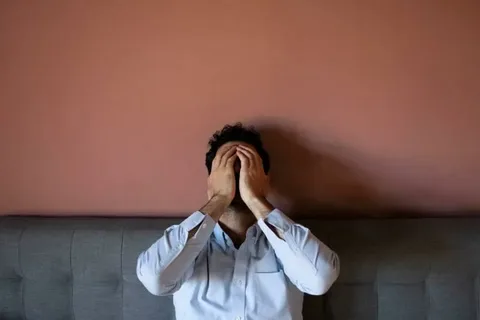
For many people, it is common that their heart races before any big event, but for some, it does not even have to be anything in particular. They find their heart pounding even when they have to do something as normal as attending a social event or going to the office.
While you know these erratic heartbeats, better called palpitations, can be alarming and might indicate certain underlying cardiac issues, can stress and anxiety also cause palpitations? Yes, they can.
Our body reacts almost immediately when we feel overwhelmed or pressured. When this happens, you might notice your breathing getting uneven, muscles tensing up, or you can even feel dizzy. This is not at all random. It is just how the body reacts, naturally, when it perceives you to be a threat, even if that’s not real.
We often overlook how strongly our mind and body are connected and that what we feel is not just something in our head. It can physically manifest as well. For some, it appears as a headache or fatigue.
For others, however, it can be a sudden flutter in the chest or their blood pressure rising. Not knowing why these changes take place in our bodies in itself can be frightening and create a loop of uncertainty and worrying.
Knowledge here becomes important. The question: Can stress and anxiety cause palpitations? In short, yes, and once you know why that happens and what you can do, it can certainly take some of your worries away. Additionally, anxiety disorders, including anxiety-related palpitations, are treatable conditions. Nowadays, anyone can connect with an expert, such as an anxiety doctor or anxiety specialist near me, for personalized care without the hassle of traveling.
What are heart palpitations like?
The National Center for Biotechnology Information defines heart palpitations as “a common, unpleasant, and often alarming awareness of heartbeats. It may result from increased conscious perception of the normal cardiac rhythm or from any cardiac arrhythmia producing changes in heart rate, rhythm, or contraction pattern…”
Simply speaking, heart palpitations can occur when you are too focused on your heartbeat that even a normal pace seems unusual; this attention is not the one that you normally pay to how your heart beats, or the heart is actually beating either too fast, too slow, or irregularly.
Heart palpitations generally last a few seconds to a minute, or might last longer.
How these palpitations feel varies person to person. For some, the sensation is like a bullet train, with the heart racing faster than it usually does, even when you are at rest. For others, it can feel like a strong, forceful thump, similar to the ones when someone is beating drums. You can actually hear the heart beating harder if you are in a quiet place. While others describe palpitations as a fluttering feeling, it feels like the heart skipped a beat all of a sudden.
You may experience this feeling at different times. It could be when you are stressed about a project or anxious, thinking something bad is going to happen, or it could be after you took your caffeine shot to keep yourself awake.
You might notice your heart racing while exercising. It is very common. Your heart can also beat harder when you’re simply trying to lie down. In that still moment, the sensation can feel even more noticeable and more intense.
It is not just how palpitations feel physically that makes one worry, but the sudden awareness of it is in itself a cause of worry, the heart being such a vital organ. The point being, worrying can make your palpitations worse.
What are the main causes of palpitations?
We already know the answer to the question ‘Can stress and anxiety cause palpitations?’ But that’s not it. You could be palpitating for a wide range of reasons. How you live your life to what you are feeling, all affects how your heart functions. Palpitations can be caused by:
- Intense emotions
- Stress
- Anxiety
- Lifestyle factors
- Binge drinking
- Caffeine
- Dehydratio
- Smoking
- Sleeplessness
- Physical and body changes
- Hormonal changes
- During pregnancy
- During or after heavy exercise
- Medications
- Antipsychotics
- Antibiotics
- Medical conditions
- Hyperthyroidism
- Anemia
- Vitamin B12 deficiency
Before you seek treatment for palpitations that are caused by stress and anxiety, it is important to rule out other possibilities. You might not know the reason behind your palpitation, but that’s where a professional steps in. They can help you find out the root cause behind your out-of-rhythm heartbeats and guide you further.
What is the difference between stress and anxiety?
According to the World Health Organization WHO, stress is a “state of worry” that we usually experience when met with a tough situation. This is a natural response from your body that prompts you to take certain action to address whatever challenges you are facing. Everyone faces stress at some point, to some extent, but l how you handle the stress is what makes the difference.
While on the other end of this take, anxiety, as per the WHO, is a “worry that is both intense and excessive.” This worry is not limited to how you feel or what’s going on in your mind, but it actually physically manifests itself. This is why you sweat or feel nauseated, or even have difficulty concentrating when you are anxious.
To sum it up, stress is caused by an external problem, and it encourages you to act upon it, whereas anxiety is an emotion that you can experience even without knowing the cause, and it can be intense to the point that it paralyzes you, even from doing normal daily tasks.
When you are stressed or anxious, your body activates the fight or flight mode when the amygdala perceives or thinks you are in some kind of threat. It immediately alerts the hypothalamus to activate the sympathetic nervous system (SNS), which triggers the release of hormones adrenaline and noradrenaline in your blood.
Your blood, during this fight or flight mode, races to the organs that you need for your immediate survival, like your brain and feet. This is done so that you can actually fight the danger or run away from it.
While this mechanism is meant to protect and keep you safe, you might find yourself questioning how it does so because the way it physically manifests, at times, can be unsettling.
Why does stress and anxiety cause heart palpitations?
When you are stressed or anxious, it is not just that you worry or keep thinking about negative outcomes. You will also see certain physical manifestations of what you are feeling.
The ‘survival mode’ takes over your consciousness and changes how your body, especially the cardiovascular system, functions. Because of this, what is within your mind is now also visible on the outside.
You will find differences in how fast and how loud the heart beats when more adrenaline and noradrenaline reach the heart.
- Increased Chronotropy: The heart beats faster than usual when these hormones signal the sinoatrial (SA) node, your body’s natural pacemaker, to fire the electrical impulses at a faster speed.
- Increased inotropy: Adrenaline and noradrenaline make the heart muscle contract with more force. Basically, the heart beats with more force. This is how you get the ‘pounding’ or ‘thumping’ feeling. Your heart is actually striking the insides of your chest wall more forcefully.
Alongside this sympathetic nervous system, we have the parasympathetic nervous system, which is responsible for making our hearts beat stably. During anxiety, however, its activity, especially the vagus nerve, is significantly reduced in the dominance of the sympathetic nervous system.
Due to this parasympathetic withdrawal, the heart is now more vulnerable to stress because it cannot properly oppose the sympathetic nervous system, and it cannot reduce the heart rate.
As mentioned earlier, the non-essential organs that you do not need for immediate survival receive less blood flow during anxiety due to vasoconstriction. It’s a process in which the blood vessels become narrow to limit blood supply, and the heart has to apply more force to move blood through the system.
Because you are now more active and aware of what’s happening around you and within you, you pay more attention to your heartbeat compared to when it is lost somewhere in the background noise.
Now you know why each time you are in a tough situation, you palpitate. You know that it is due to biological reasons, but that alone is not enough. You need to know that your palpitations are due to stress and anxiety only and not some other reason.
Signs Your Palpitations May Be Linked to Stress or Anxiety h3
Your heart can beat faster after you run a mile. It can thump while you are doing nothing. So how do you know they are linked to stress or anxiety? The answer: Observe yourself. The way palpitations appear and go can reveal certain important clues about what could be their cause.
- The state of mind: When you are palpitating, what is the state of your mind? Are you worried about something? Overthinking about things that you might not have control over? Are you anticipating something stressful? If the answer is yes, there is a high chance your palpitations are caused by stress or anxiety. They can ease as soon as your mind settles and you calm down.
- Physical state: Whether you are sitting quietly, resting, or engaged in heavy exercise, it can also cause palpitations. If you are not physically exerting, it might not be linked to it, but your internal state at that moment.
- Other symptoms: Along with palpitations, do you observe other signs of stress or anxiety?
- Sweating: Even when you are in a cool enough environment, you are constantly rubbing your face or your palms are getting sweaty.
- Hyperventilation: No matter how hard you try, it feels as if you can’t breathe in enough. You cannot take as much air as you need, and it further adds to your discomfort.
- Dizziness: You might find your balance getting a bit unstable as you become lightheaded. This is additionally made worse by shallow breathing.
These symptoms are uncomfortable, but they do point to what you might be going through. Looking out for these signs can help you know what is causing your heart to beat erratically.
When should you be concerned about heart palpitations?
By now, you know how stress and anxiety can cause palpitations and also that you could be palpitating for other reasons, so they can be harmful as well. You should consider evaluation when:
- Palpitations are becoming frequent or worse, to the extent that they are causing intolerable chest pain.
- You get lightheaded or feel like you might faint because this means blood is not effectively reaching your brain.
- You have other medical conditions, particularly those related to the heart or blood pressure.
Even if these are what could be called some red flags, you should not wait for your palpitations to lead to something else, something bigger. You should visit the doctor when you feel uneasy.
Palpitations caused by stress or anxiety are usually not harmful, but that does not mean you should not do anything about them. You should actually. It is important to deal with the underlying cause of your stress or anxiety.
How to manage anxiety heart palpitations?
When we talk about managing stress-induced palpitations, we are mostly focusing on how we can calm ourselves overall. Little but consistent steps over time will help us build a system that actually makes a difference. Not just how you feel, but your overall health, including a heart that beats just in fine rhythm.
- Breathing exercises: As we read earlier, hyperventilation can further affect how your heart beats, so it is important to start with that. You need slow and controlled breathing whenever you are panicking to get your emotions in check, as well as to ease your heartbeat.
You can try the box breathing technique, where you need to breathe in through your nose for four seconds, hold it for another four seconds, breathe out while counting four, and again hold for four seconds, and repeat this until you have calmed down and can breathe properly.
- Reducing caffeine: Caffeine is a stimulant that increases your heart rate. You are already in a heightened state, and you do not want anything that adds fuel to the fire.
- Sleep: You must follow good sleep hygiene, meaning you go to bed every day at the same time, even on weekends, you prioritize your sleep, and do not cut short on it to get other things done. A good sleep can manage your stress and the palpitations caused by it.
- Regularly exercising: Studies have found that adults who regularly engage in physical activities have a lower chance of developing anxiety or depression. You can start with something as simple as walking or aerobic activities to release your tension.
These approaches do not eliminate anxiety. You cannot eliminate it, but they can help you to be in more control of your body. You will, with these healthy practices over time, learn to ease your palpitations.
Treating stress-induced palpitations
The treatment for palpitations varies depending on its cause. When it is caused by stress or anxiety, the best solution is to address what is causing you them.
Since your heart is directly connected to your mind, you must learn to manage your thoughts and emotions first. A psychiatrist can help you find the right balance between the two with:
- Cognitive Behavioral Therapy (CBT): You learn to observe your thoughts because what you think directly affects what you feel. You learn to change those thought patterns and move away from negative thoughts to alternatives that are not extreme, that help you grow.
- Exposure Therapy: You address what you fear, but in a controlled environment that is not too much for you to take. Doing so, you learn to face what you fear and overcome it.
The best thing is, you don’t have to do this alone. You can get help as near as one tap away. You can reach out to online psychiatrists right from your home who can provide you clarity, give you guidance, and treatment, including medication that’s helpful for you. If you are, for example, a New Jersey resident, you can only consult a licensed board-certified psychiatrist New Jersey for medication refills, as licensed psychiatrists can only dispense medication online if the patient resident of the psychiatrist’s licensed state.
Finding a heart lost in worries
It can be scary and, to some extent, frustrating when your own body doesn’t listen to you, your own heart races fast while you stand still. You can seem powerless or out of control, but you now know it is just your body’s old way of protecting you, even when it doesn’t have to.
Palpitations do not mean your heart is failing; instead, it is just working harder because your mind has a lot to carry. While these sensations are too loud, they are rarely dangerous when they are connected to your emotions.
Think of palpitations as markers on the trail, and not the destination themselves. They only point to what we might find at the end. Again, this journey does not have to be lonely or scary; with the right help, you can have a heart that just works and not overworks.
Reach out to us and let us become your compass, so that you can walk on the path to a peaceful heart.